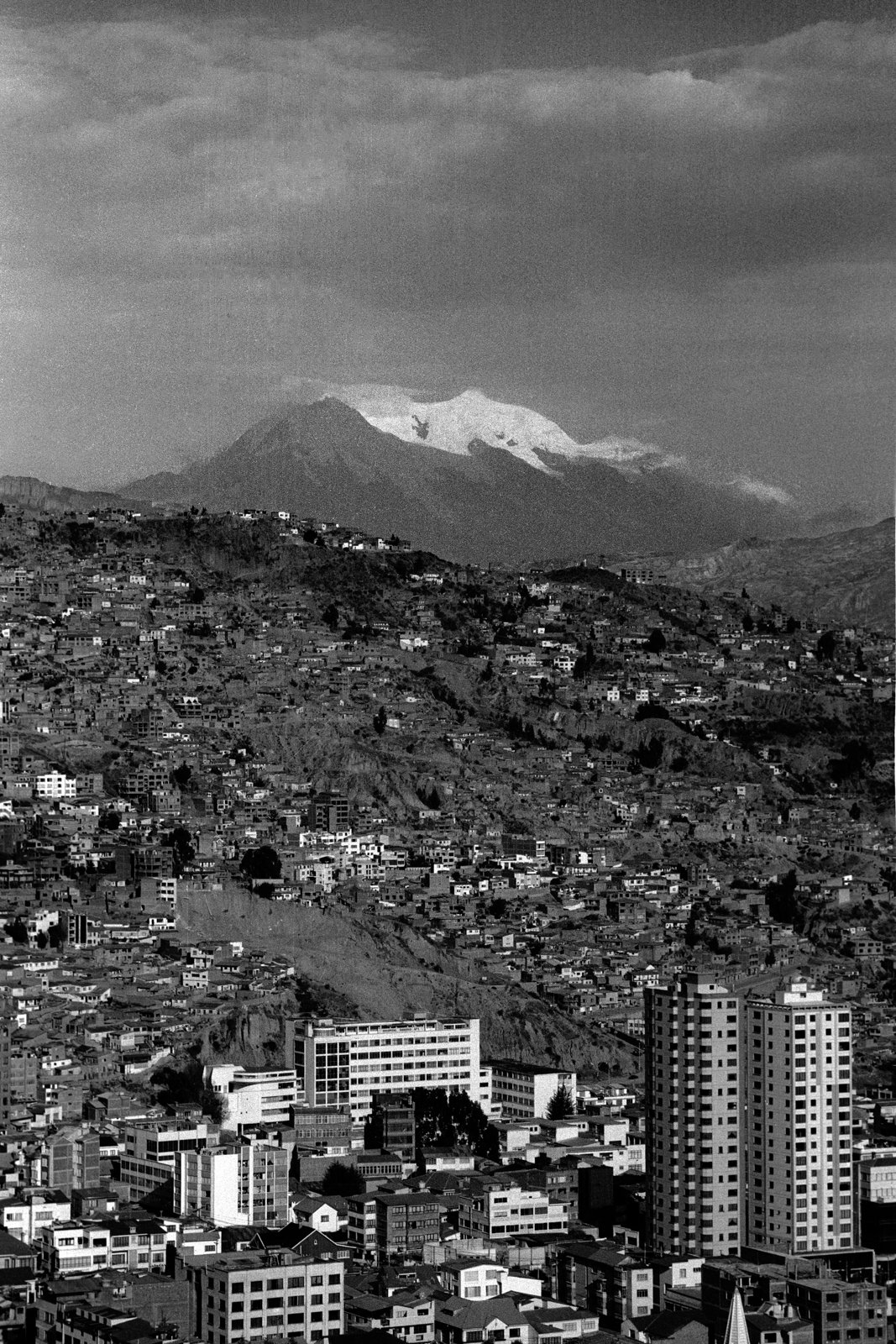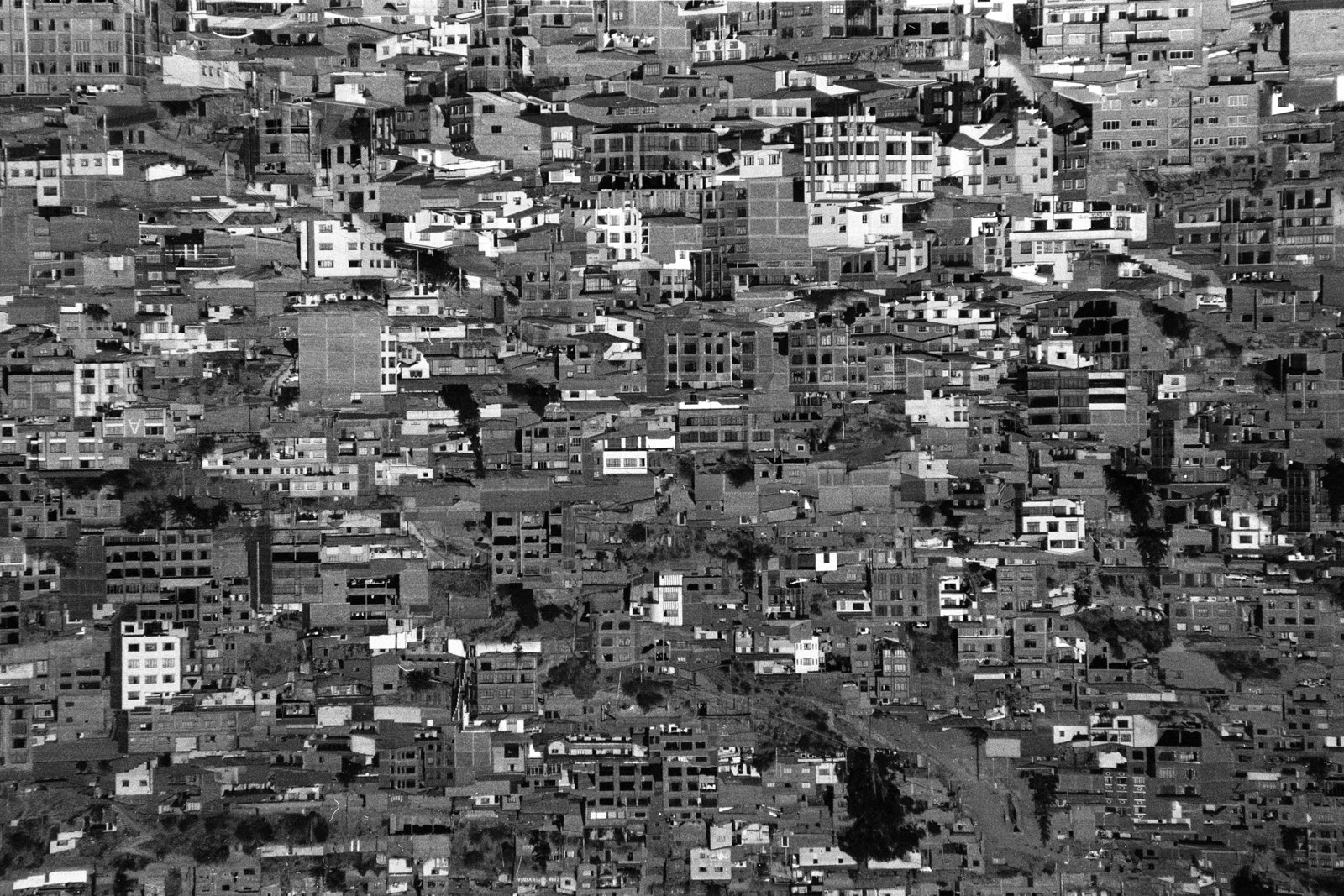
La Paz lies very close to the sky, and taking photographs was often difficult because of the intense light. For most of its inhabitants, it is a harsh city, as rugged as the Altiplano itself, yet colorful and full of smells, with countless markets, street vendors and social conflicts.
My first encounter with the chicos de la calle introduced me to their smell: dirt mixed with paint thinner. Then I noticed the marks, spiderwebs etched into their skin, symbols of both status and suffering. Later, I came to understand that the streets themselves were more addictive than the glue: burning fast, trapped in an eternal present.
I gradually discovered their contradictions: children with the experience of grown men, whose shoulders seemed broader than mine, yet who huddled together at night, afraid of the darkness.
After a few months, I had learned their names and grown fond of their toothless smiles. I began to understand how much they needed affection, and how much I needed them, because simply being with them made me feel happy.
After nine months, the time came to leave. It was difficult. I felt guilty, as though I were betraying them and returning to a life of wealth and good fortune after giving so little and receiving so much. Over the years, many of the boys have died, but they still live on in my dreams, my thoughts and my photographs. It is not enough...
I would like to express an impossible wish: that the children who burn so fast, los chicos de la calle, may never go out.