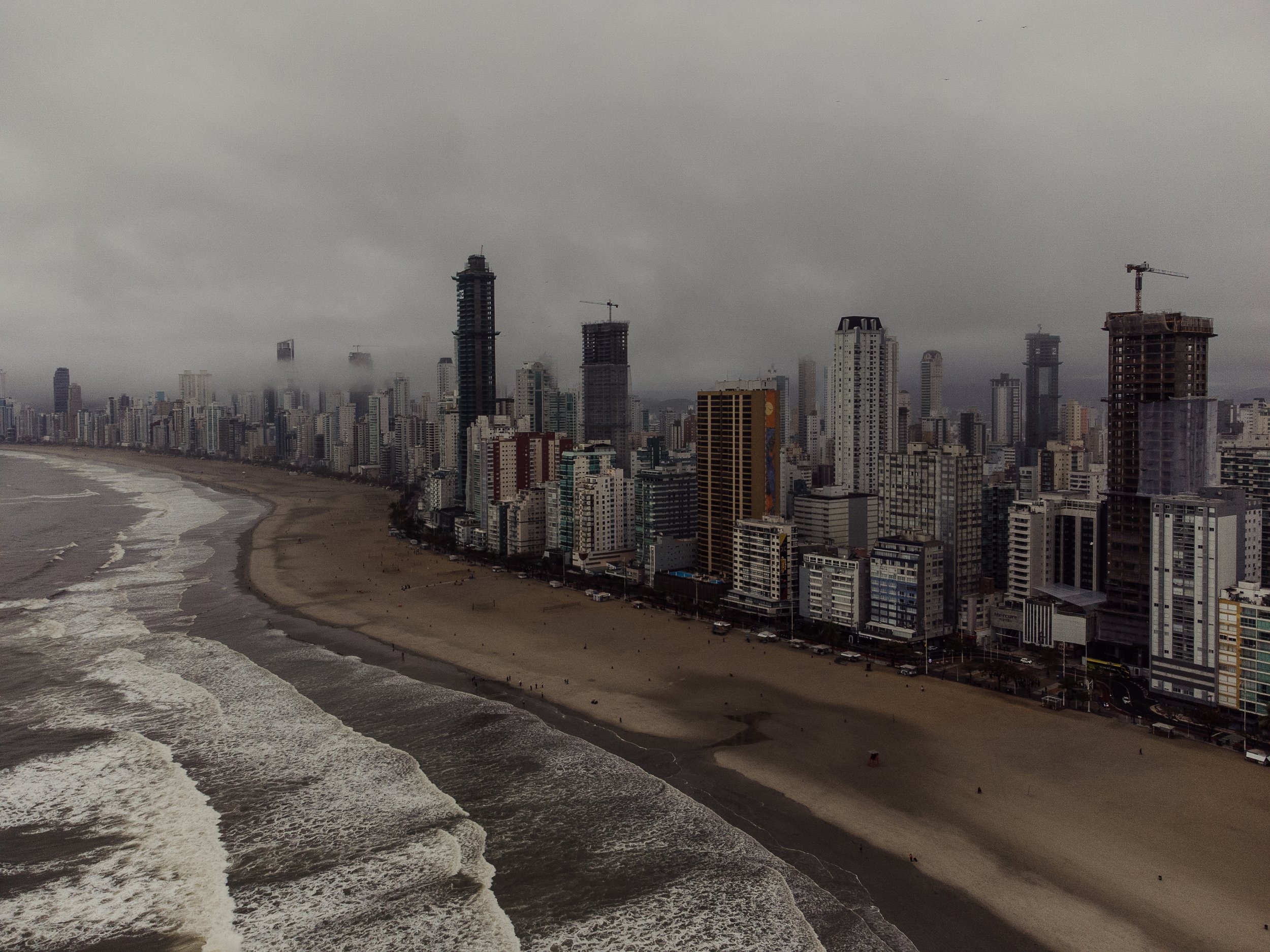
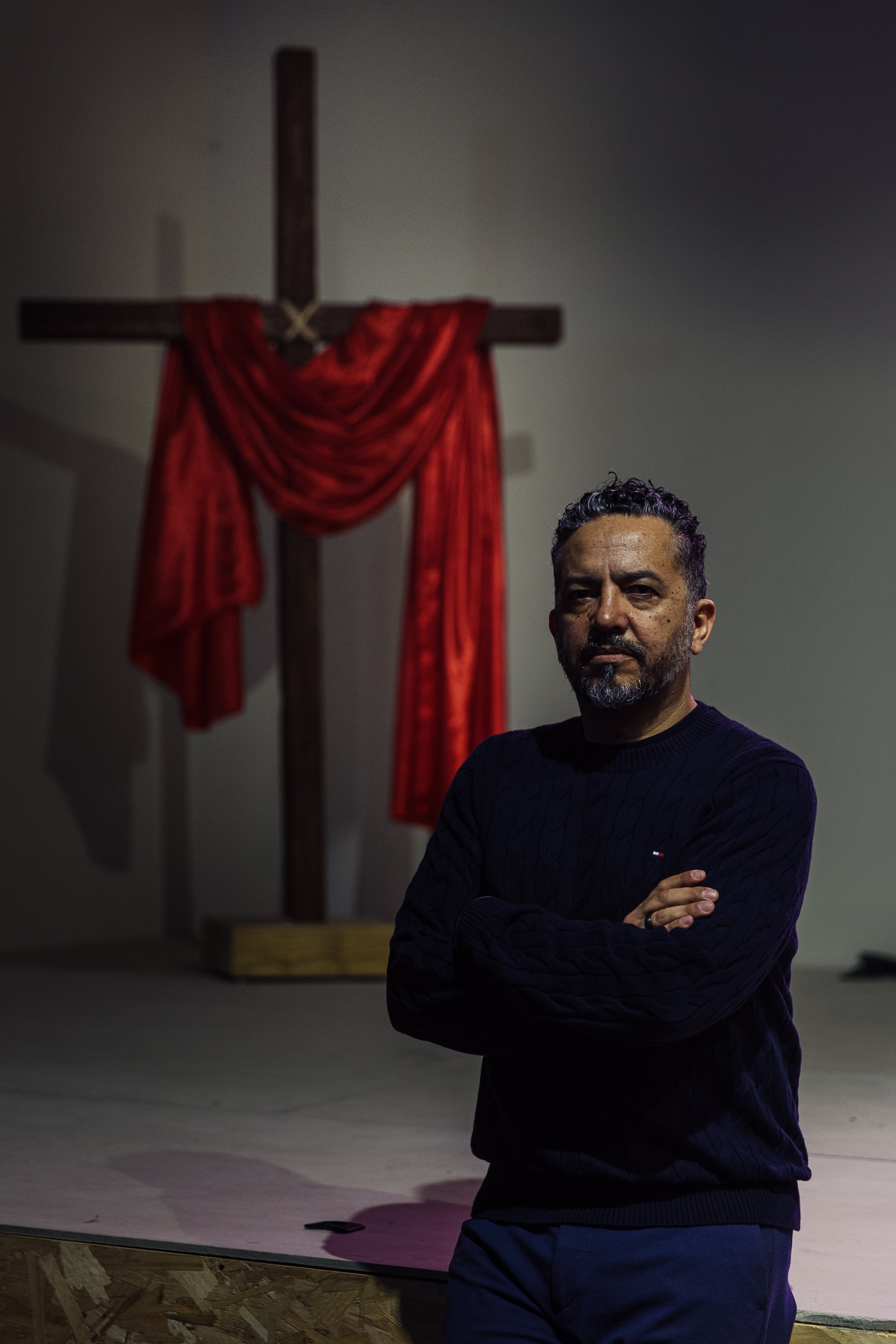
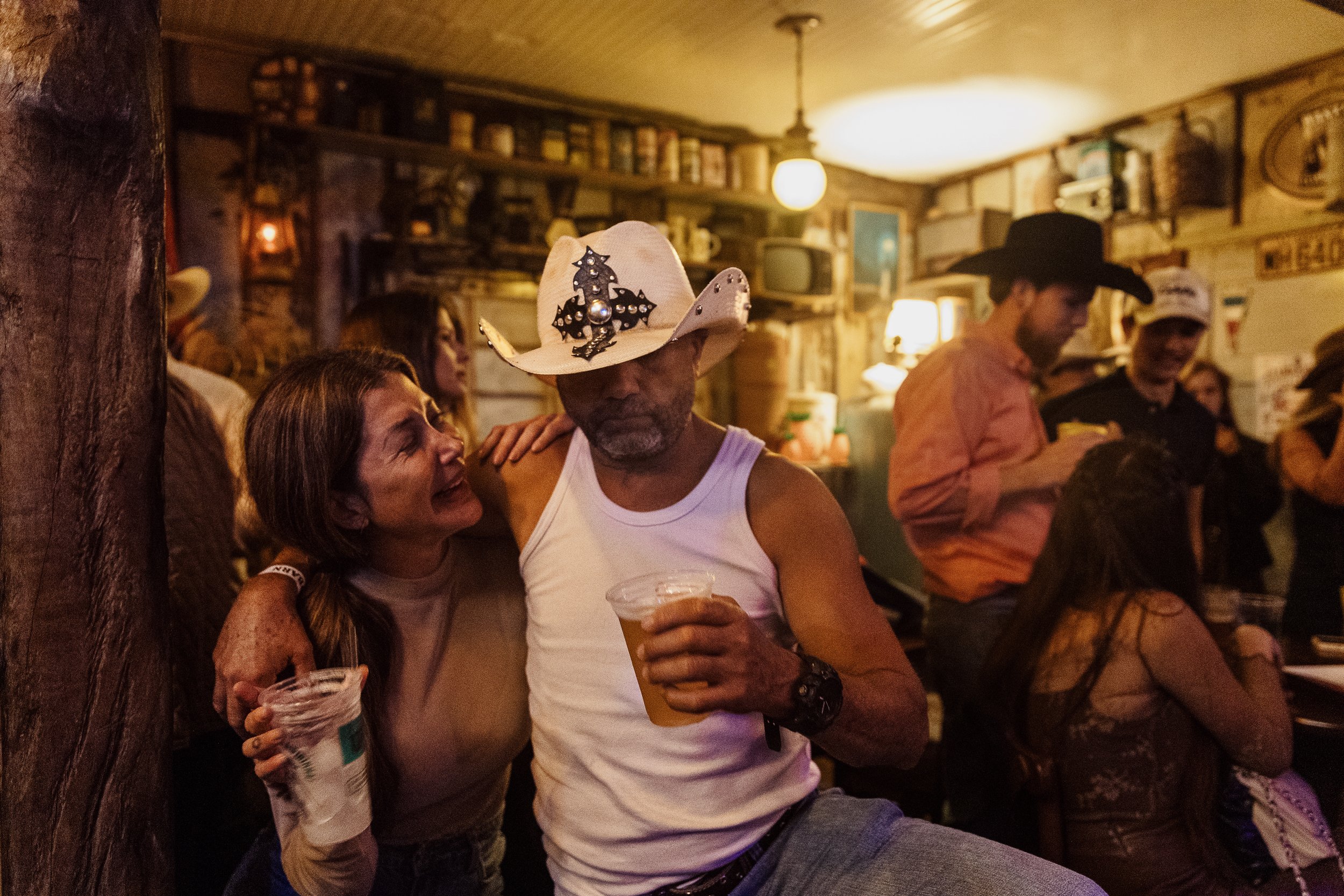
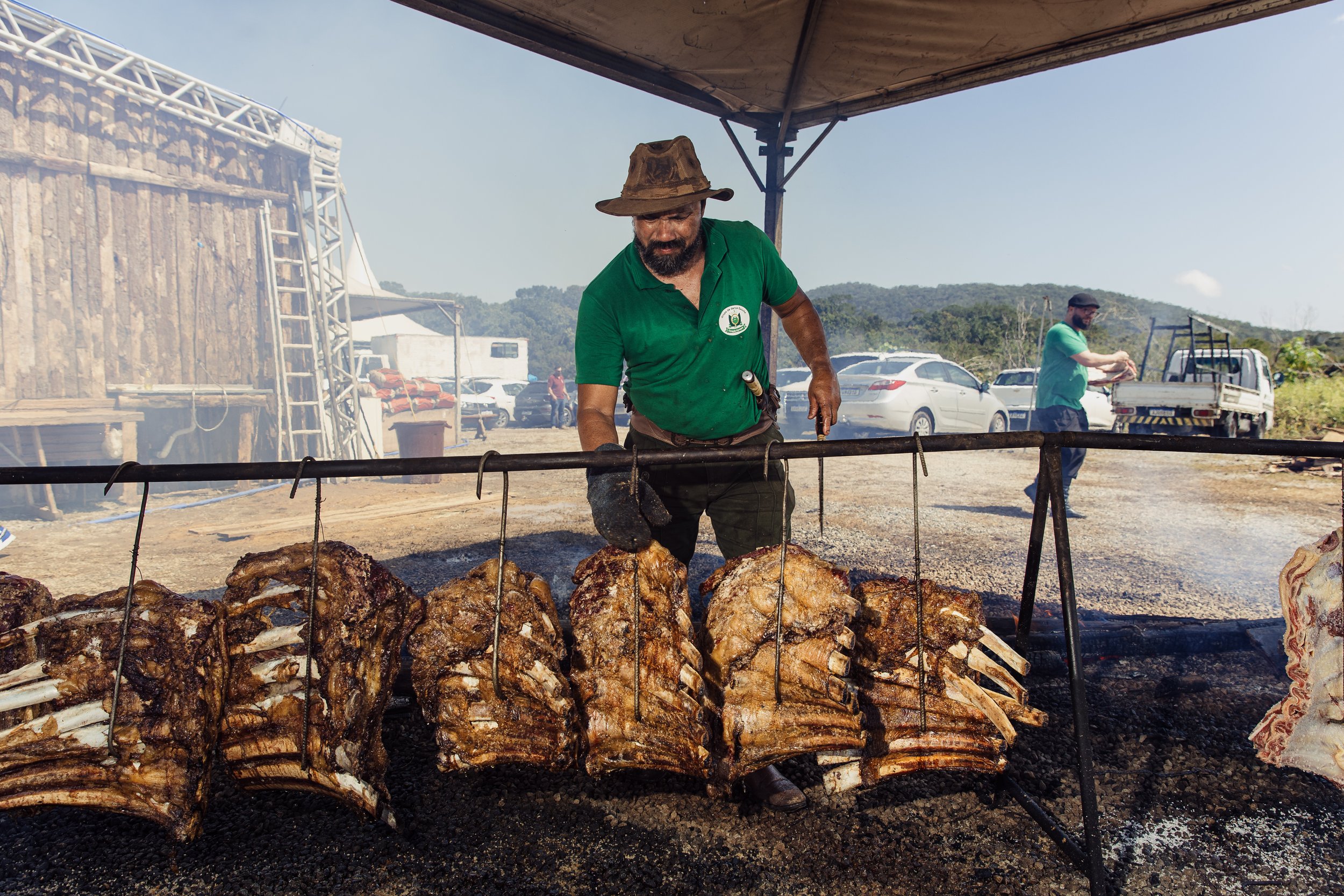
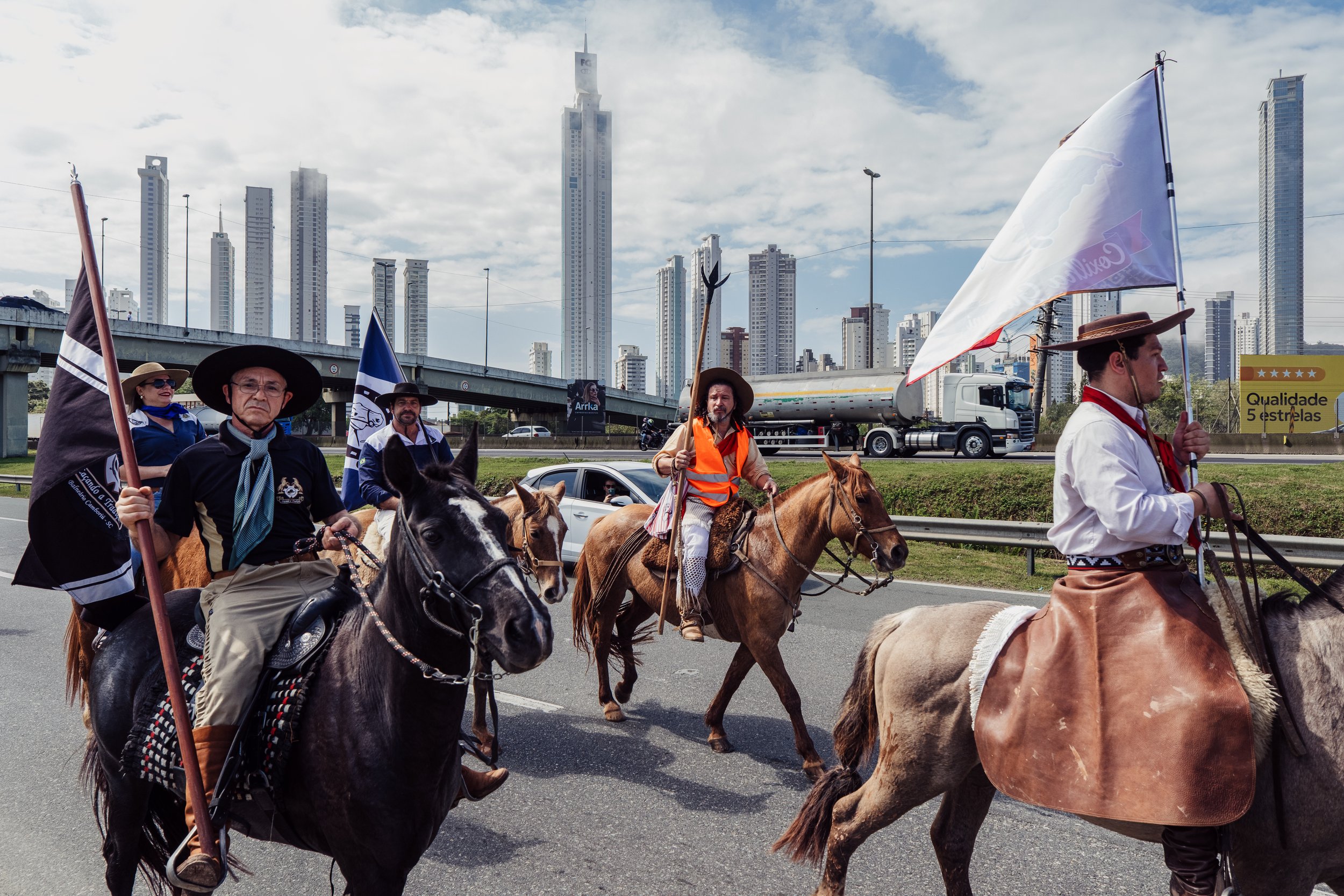
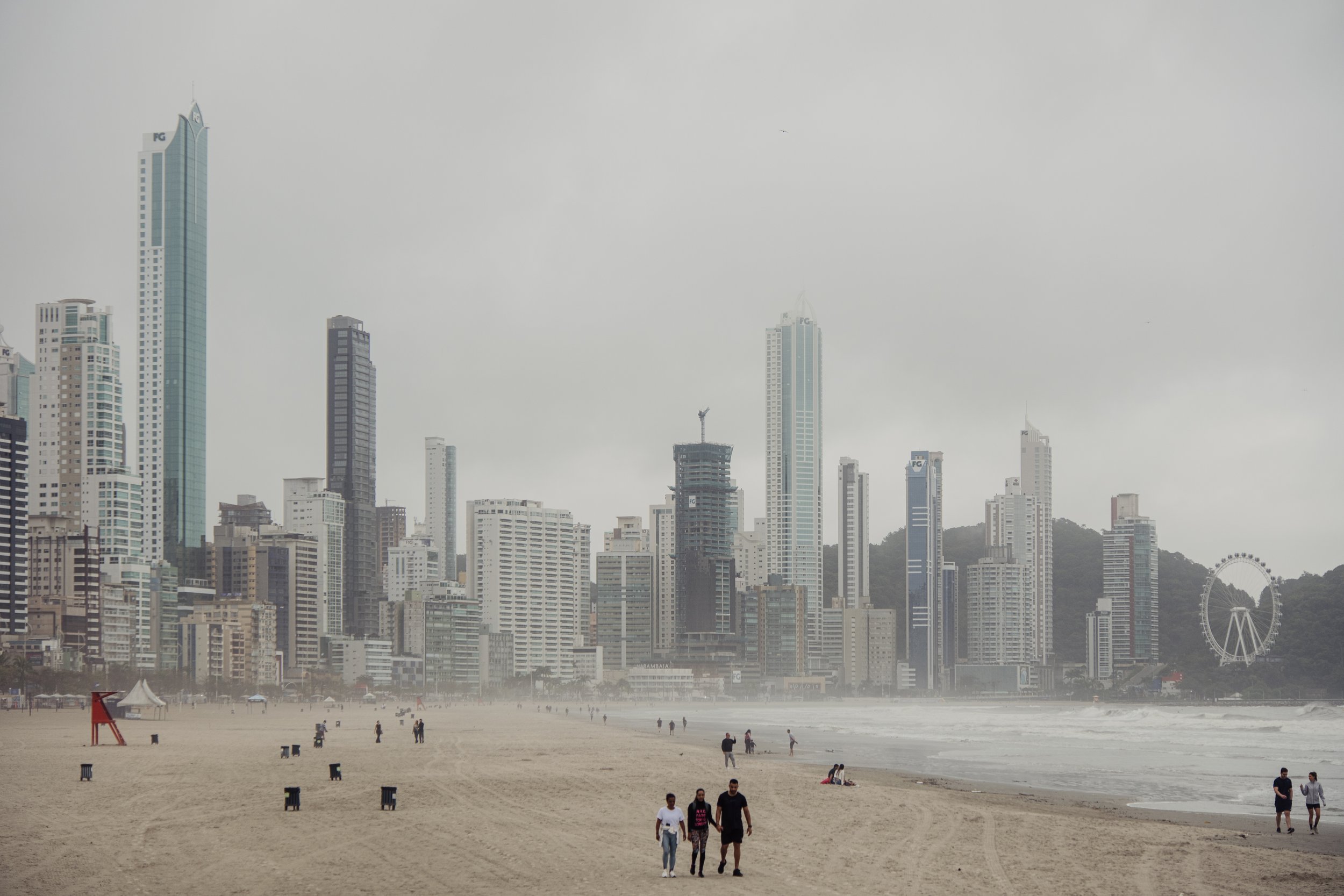
On the coast of Santa Catarina, concrete giants compete for the sky. Their mirrored façades reflect an ideal of prosperity that has transformed the landscape into a monument to wealth and individual success.
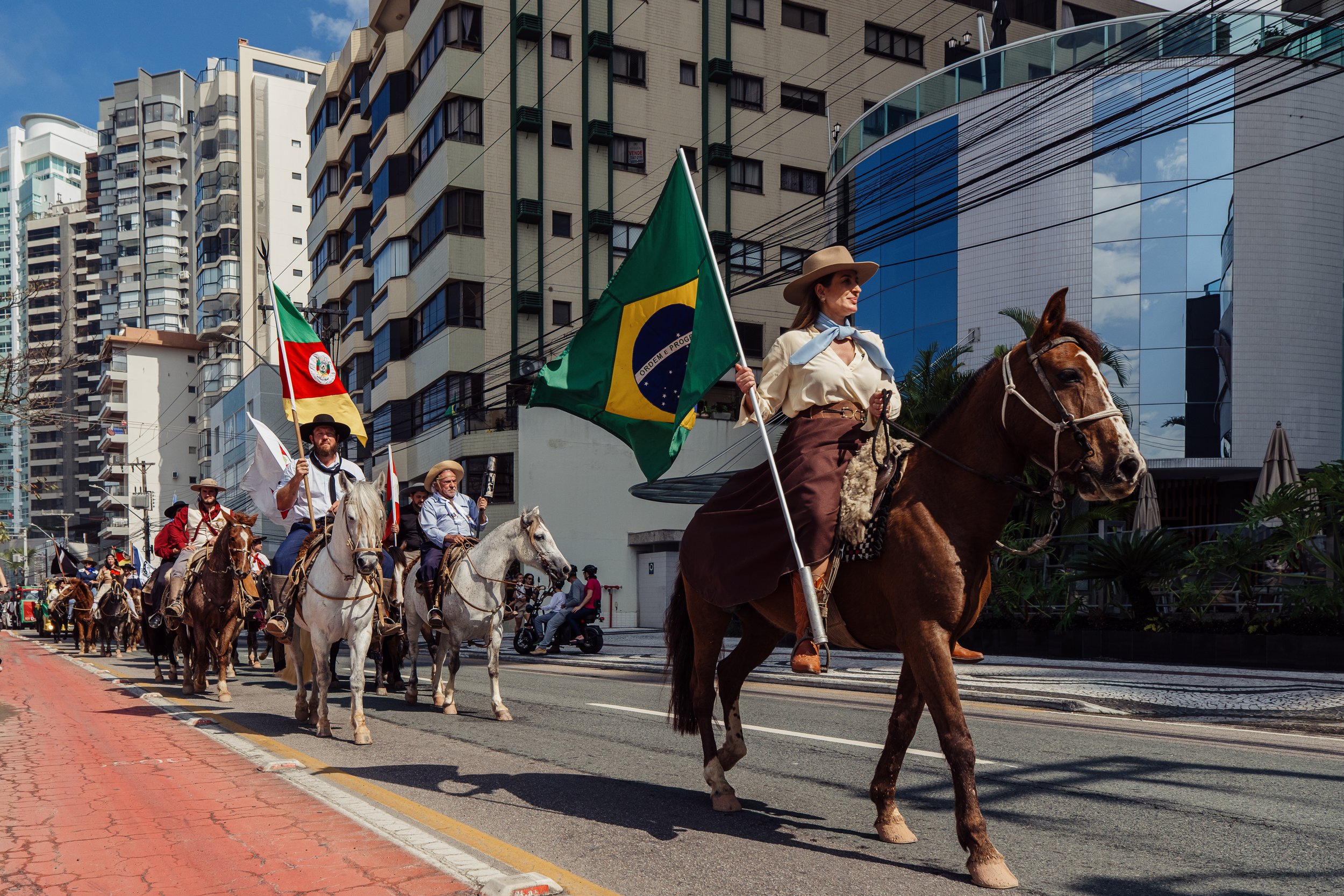
The dream began with soybeans, grew through real estate speculation, and found its imagery of consumption, ostentation and freedom in the United States. Today, amid skyscrapers, country music and fortunes flaunted without restraint, Balneário Camboriú has become one of the symbols of Bolsonarism. Even Neymar has bought a property here. At the polls, Flávio Bolsonaro secured 70% of the vote in the first round, compared with 47% nationwide.
But every city has what it would rather keep hidden.
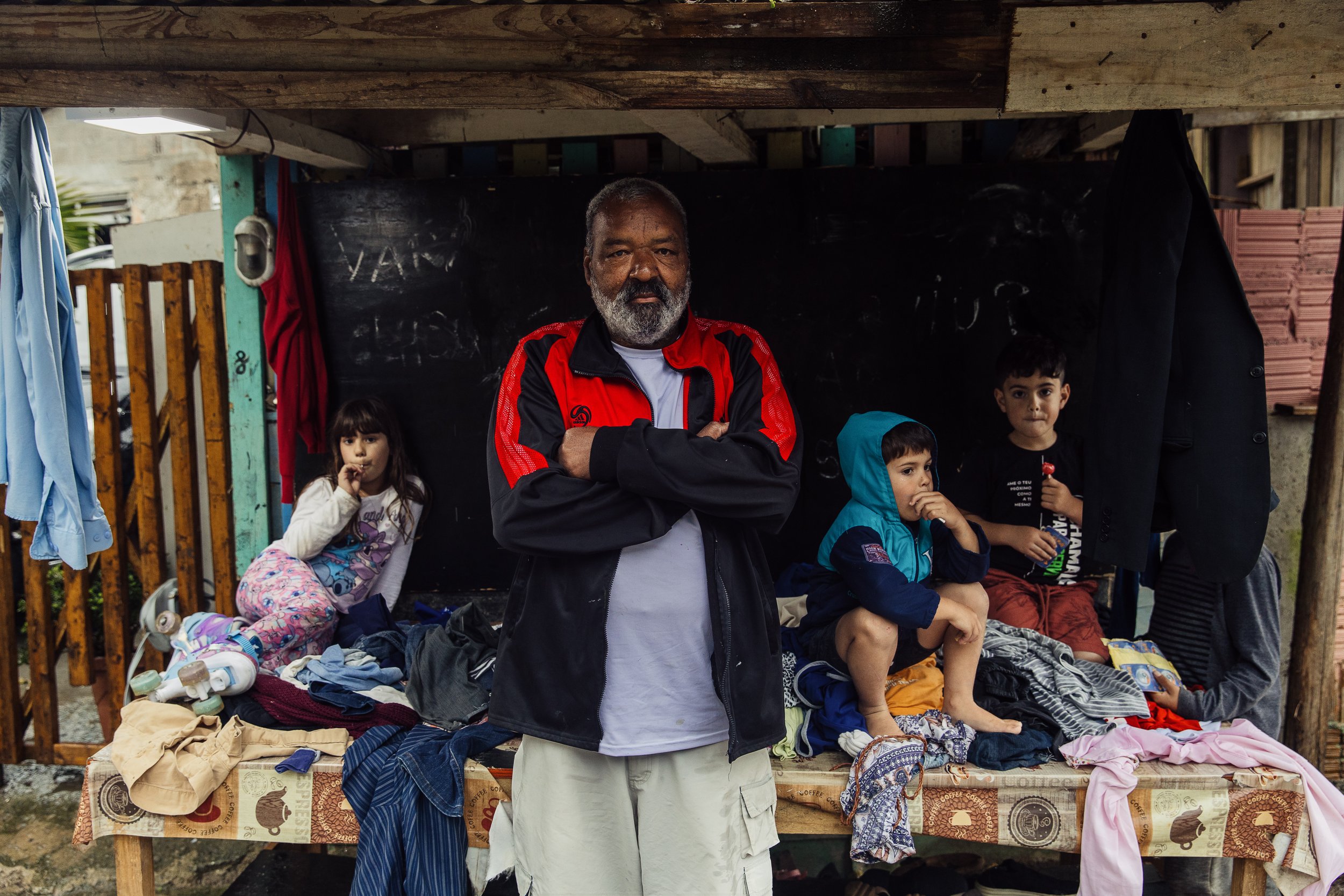
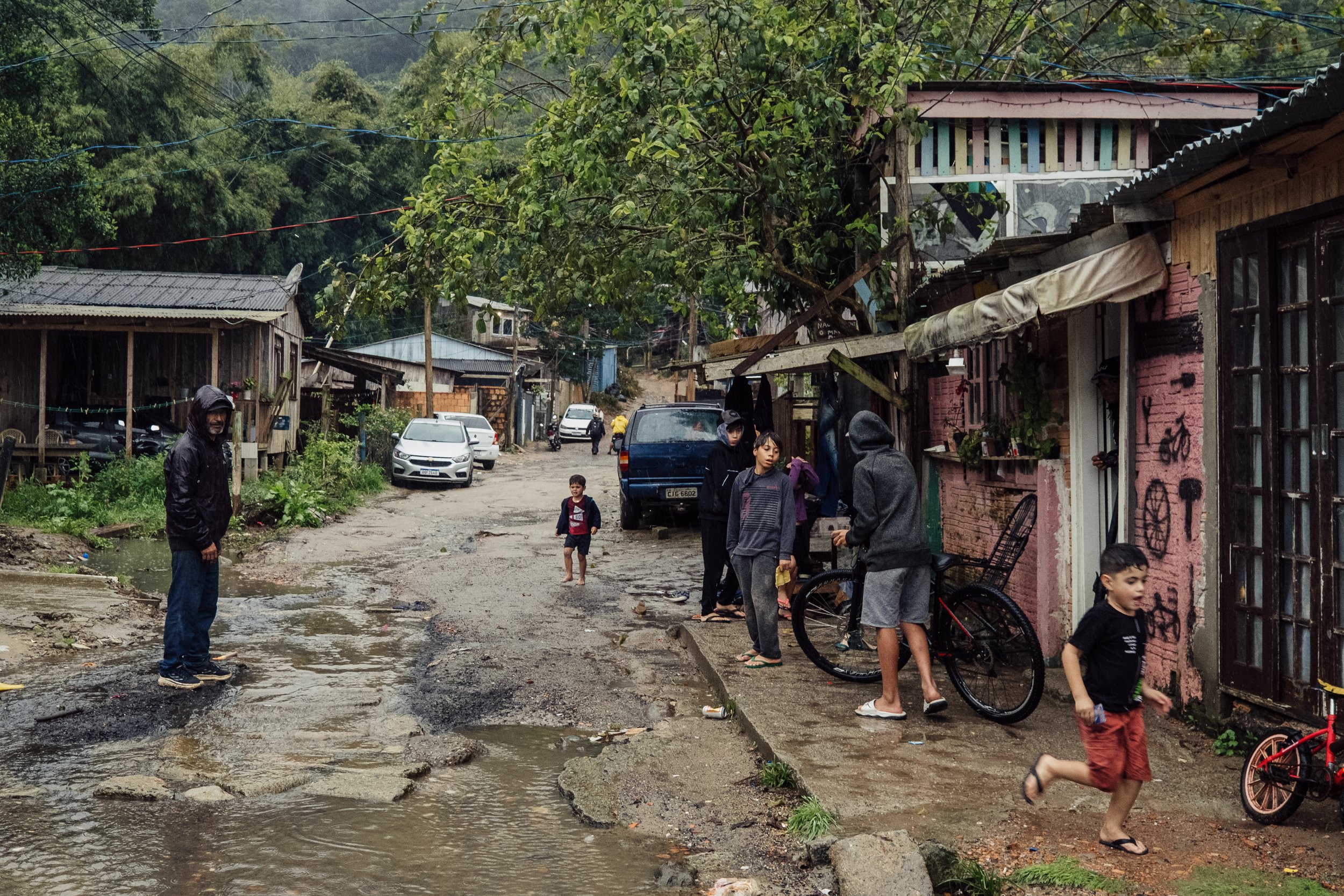
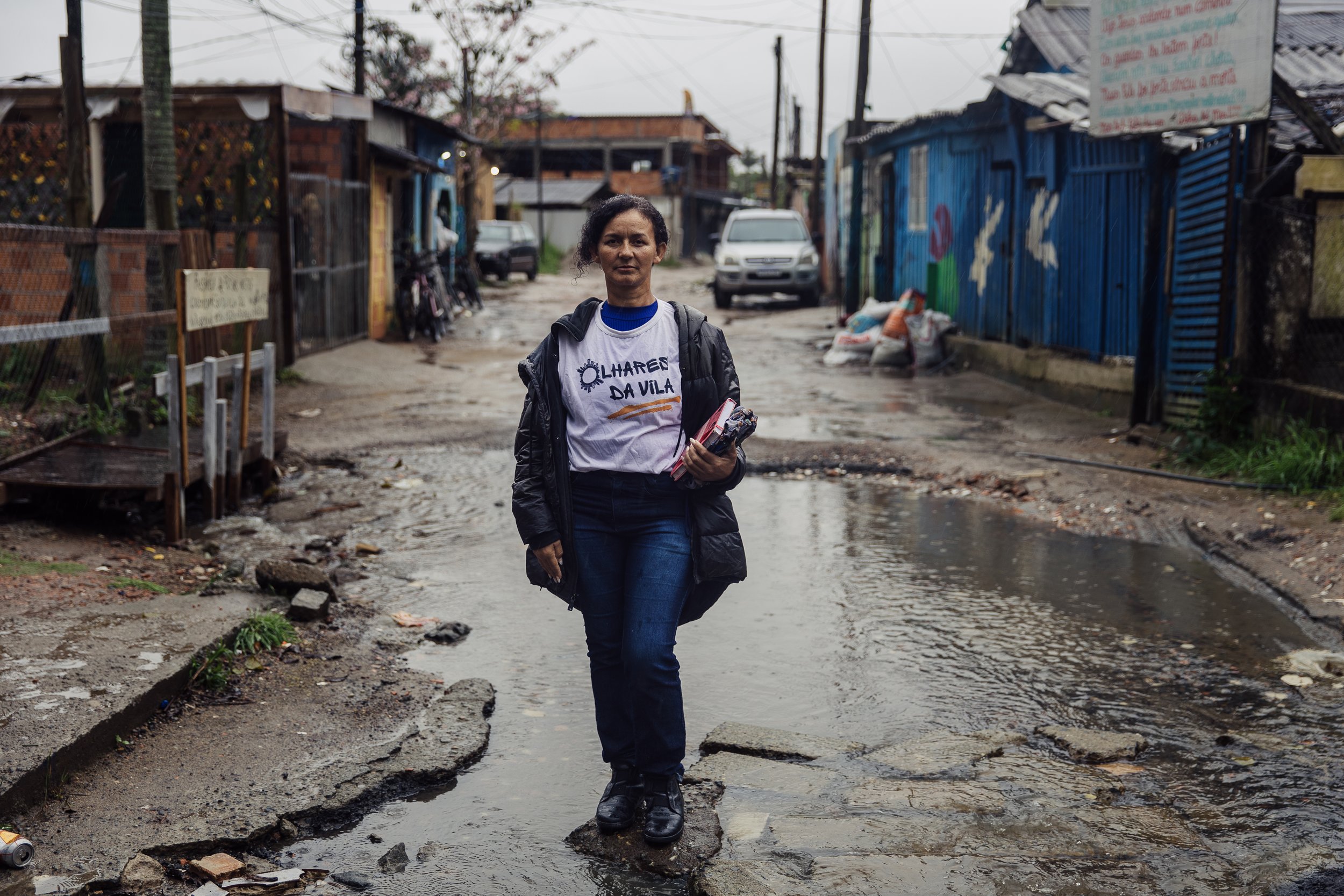
Fifteen minutes from the beachfront, around 280 families live in makeshift shacks, on muddy plots of land without basic infrastructure. They are the workers who build, clean and sustain the city of millionaires, yet cannot fully enjoy the wealth they help create.
Behind the myth of merit and prosperity lie persistent social and racial inequalities in a country marked by deep historical divisions. In the South, where many German and Italian immigrants settled in the nineteenth century, 72.6% of the population identifies as white. In the Northeast, 72% identify as Black or mixed-race, according to the 2022 Census.
Known as the “Brazilian Miami,” Balneário Camboriú embodies a dream in its skyscrapers. But their shadows reveal the price of this prosperity — and who has been left out.
Balneário Camboriú, Brasil 2026