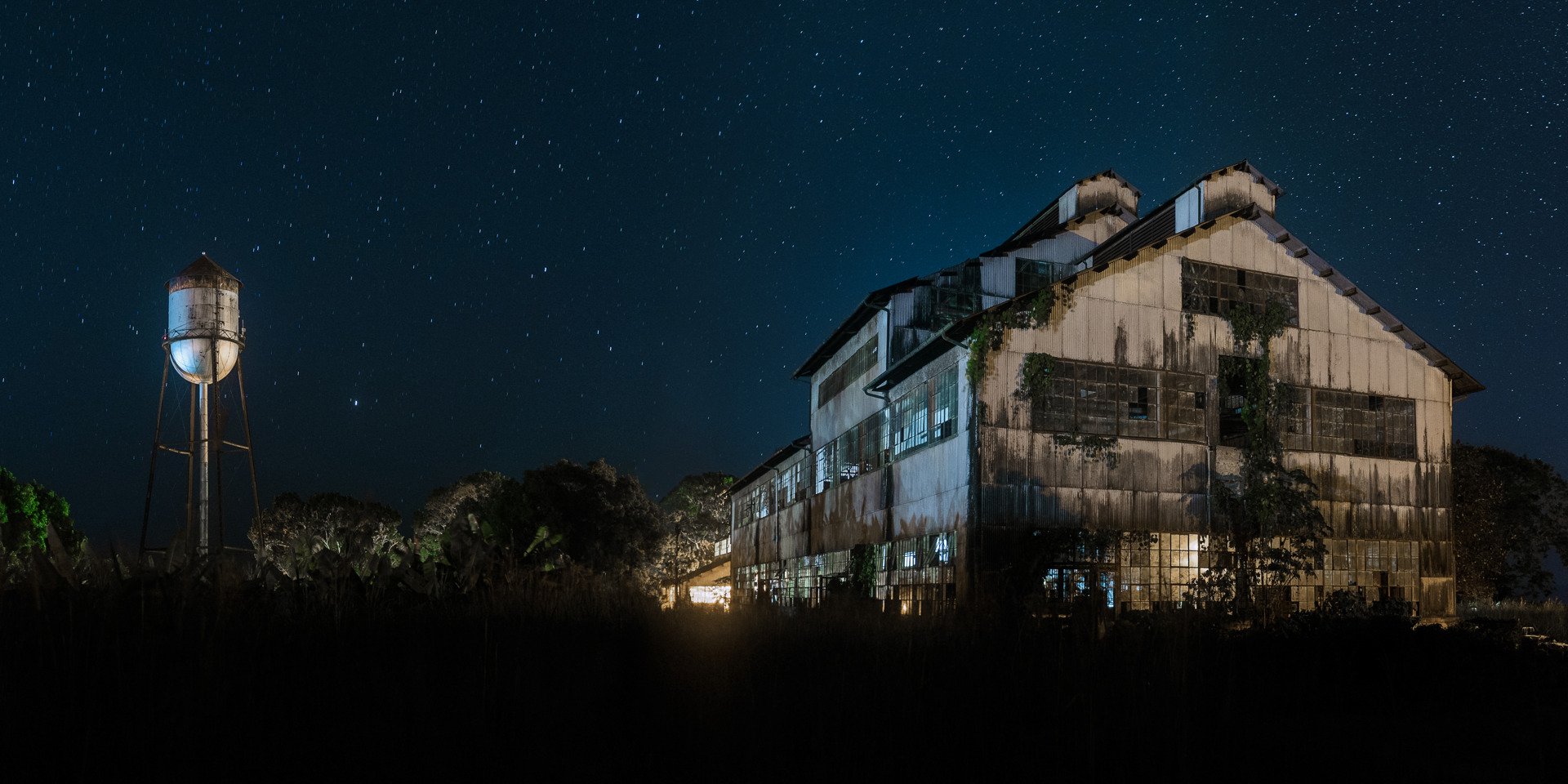
In 1927, Henry Ford purchased 1,500 square kilometers of land along the Tapajós River in the Brazilian Amazon to establish a rubber-producing town independent of British-controlled supplies. Built according to the American model, Fordlândia featured prefabricated houses, factories, a hospital and facilities for workers. However, a lack of experience in tropical agriculture, the spread of a fungus and the imposition of an unfamiliar American lifestyle on the local population led to the project's failure. In 1930, workers revolted against the company's strict rules and food policies. Ford later moved production to Belterra, but the advent of synthetic rubber brought the venture to an end in 1945.
Today, Fordlândia is still inhabited by descendants of the Brazilian workers who lived through this American experiment. One of them, known as “the Duke,” guided me through the abandoned factories, the former residential quarters of American employees and the ruins of a hospital that was once considered state-of-the-art. Our journey lasted throughout the night and ended at sunrise in Fordlândia's crumbling cemetery — a final reminder of Henry Ford's shattered capitalist dream.


